How to Stop Glasses from Fogging While Wearing a Mask or Cooking
Learn practical ways to prevent eyeglasses from fogging while wearing a mask or cooking. Discover simple cleaning tips, anti-fog solutions, and habits that help keep your vision clear throughout the day.
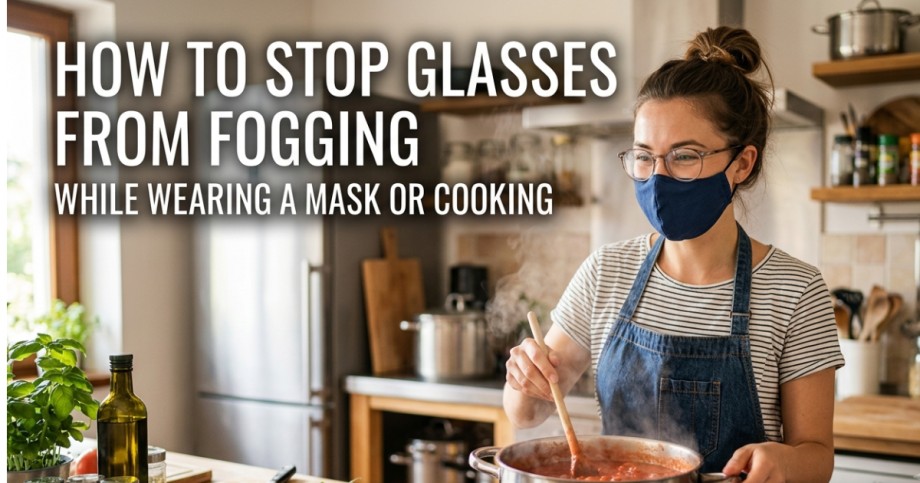
A clear pair of lenses can become useless within seconds when warm, moist air meets a cooler surface. Whether you're preparing dinner over a steaming pot or wearing a face mask during work, fogged-up eyeglasses can interrupt your vision, reduce productivity, and even create safety risks.
The good news is that lens fogging isn't unavoidable. A few simple adjustments to how you wear your glasses, your mask, and how you care for your lenses can dramatically reduce condensation.
Why Glasses Fog in the First Place
Fog forms when warm, humid air contacts a cooler lens surface. The moisture condenses into tiny water droplets that scatter light, creating the cloudy appearance.
Two everyday situations commonly cause this:
Face masks: Exhaled breath escapes from the top of the mask and rises directly toward your lenses.
Cooking: Steam from boiling water, frying, baking, or dishwashing reaches the lenses before dispersing.
The larger the temperature difference between the air and the lens surface, the faster fog develops.
Make Your Mask Work With Your Glasses
Most fogging problems begin with poorly directed airflow rather than the mask itself.
A mask should fit snugly across the bridge of your nose. When gaps exist, every breath travels upward toward your lenses.
To improve the seal:
Choose masks with an adjustable nose wire.
Mold the wire firmly around your nose.
Position the top edge higher on the bridge of your nose.
Place your glasses slightly over the upper edge of the mask to help hold it in place.
This redirects much of your breath through the mask instead of upward.
Wash Your Lenses the Right Way
Clean lenses resist fog better than lenses coated with oils and fingerprints.
Wash your glasses using lukewarm water and a small amount of lotion-free dish soap. Rinse thoroughly and dry with a clean microfiber cloth.
The thin invisible film left behind after proper cleaning helps moisture spread more evenly across the lens instead of forming countless tiny droplets.
Avoid:
Paper towels
Shirts or tissues
Harsh household cleaners
Abrasive cloths
These materials may scratch protective coatings over time.
Use Anti-Fog Lens Treatments
Anti-fog products are designed to minimize condensation by creating a transparent layer that discourages droplet formation.
Available options include:
Anti-fog sprays
Anti-fog wipes
Anti-fog gels
Factory-applied anti-fog lens coatings
Always use products recommended for eyewear lenses, especially if your glasses include anti-reflective, blue-light, or photochromic coatings.
Adjust Your Position While Cooking
Standing directly over steam exposes your glasses to concentrated moisture.
Instead:
Step slightly back when lifting pot lids.
Open lids away from your face.
Turn your head slightly while checking boiling food.
Allow steam to escape before leaning over cookware.
These small habits significantly reduce the amount of moisture reaching your lenses.
Improve Kitchen Ventilation
Steam lingers longer in enclosed kitchens.
Reduce airborne moisture by:
Turning on the range hood before cooking.
Using an exhaust fan.
Opening nearby windows when possible.
Running ventilation while washing dishes with hot water.
Lower humidity means fewer opportunities for condensation.
Warm Your Glasses Before Entering Hot Environments
Cold lenses fog almost instantly when exposed to warm, humid air.
If you're moving from an air-conditioned room into a warm kitchen, allow your glasses to gradually adjust to room temperature before standing near steam.
A smaller temperature difference slows condensation.
Choose Frames That Promote Better Airflow
Some frame styles trap warm air closer to the face.
Frames with:
Slightly higher nose pads
A modest gap between lenses and cheeks
Lightweight construction
allow better air circulation and help moisture escape before collecting on the lenses.
Extremely close-fitting frames may hold humid air around the lenses for longer periods.
Replace Worn-Out Masks
Masks lose their shape after repeated use or washing.
When the nose area no longer seals properly, warm air escapes upward much more easily.
Replace stretched or damaged masks regularly to maintain an effective fit.
Keep a Microfiber Cloth Nearby
Even with preventive measures, occasional fogging can still occur.
A clean microfiber cloth quickly removes moisture without scratching the lenses or leaving lint behind. Unlike tissues or clothing, microfiber lifts water and oils safely from coated lenses.
Habits That Make Fogging Worse
Many people unintentionally increase fogging by following outdated advice.
Avoid:
Pulling the mask below your nose
Using saliva or toothpaste on lenses
Applying household soaps without rinsing
Touching lenses with oily fingers
Cleaning lenses with rough fabrics
These methods either damage lens coatings or leave residue that attracts more moisture.
When Anti-Fog Coatings Are Worth Considering
If you spend long hours in environments where fogging is unavoidable, permanent anti-fog technology may be a worthwhile investment.
Professionals such as healthcare workers, laboratory staff, chefs, warehouse employees, and manufacturing personnel often benefit from lenses designed specifically to resist repeated condensation.
These coatings provide longer-lasting performance than temporary sprays and require less daily maintenance.
If your current glasses no longer fit properly or constantly slip while wearing a mask, it may be time to invest in a better-fitting pair. Learning how to choose the right eyeglass frames for your face shape can improve comfort, reduce fogging, and provide a more secure fit for everyday wear.
Clear Vision Starts With Small Adjustments
Fogged lenses are usually the result of airflow, humidity, and temperature—not your glasses themselves. Improving mask fit, keeping lenses clean, managing kitchen steam, and using reliable anti-fog solutions can dramatically reduce condensation in everyday situations.
Rather than relying on quick fixes that last only a few minutes, focus on practical habits that prevent moisture from reaching your lenses in the first place. With the right combination of proper eyewear care and better airflow management, you can enjoy clearer vision whether you're wearing a mask at work or preparing meals at home.


.webp)
.webp)